
When Prime Minister Narendra Modi unveiled the “MANAV” Vision for AI at the India AI Impact Summit at New Delhi's Bharat Mandapam on 19 February, it was a genuinely significant moment. Manav, meaning human, stands for five guiding principles:
It places the person — and not the machine — at the centre of AI governance. In doing so, it signals an India not merely waiting to receive the norms of an AI-driven world, but attempting to help write them.
The summit itself has made history. Billed as the largest AI summit ever convened, it brought together an extraordinary cross-section of stakeholders — heads of state, technology CEOs, researchers, civil society organisations, startup founders, and policymakers from across the globe.
Participation spanned over 100 countries, with major technology corporations, multilateral institutions, and academic bodies represented in the same hall.
Yes, there were logistical hiccups — scheduling overruns, connectivity issues in breakout sessions, and the usual friction of coordinating thousands of participants across time zones and agendas. Yet, the sheer breadth of voices in the room, and the seriousness with which delegations engaged, marked this as a watershed moment in global AI diplomacy.
Prime Minister Modi’s MANAV Vision for AI, launched at the India AI Impact Summit, centres on ethical, inclusive, and sovereign AI systems. Yet, true transformation depends on strengthening India’s AI infrastructure at every layer. The question remains: Can India turn its ambitious AI frameworks into real benefits for every citizen?
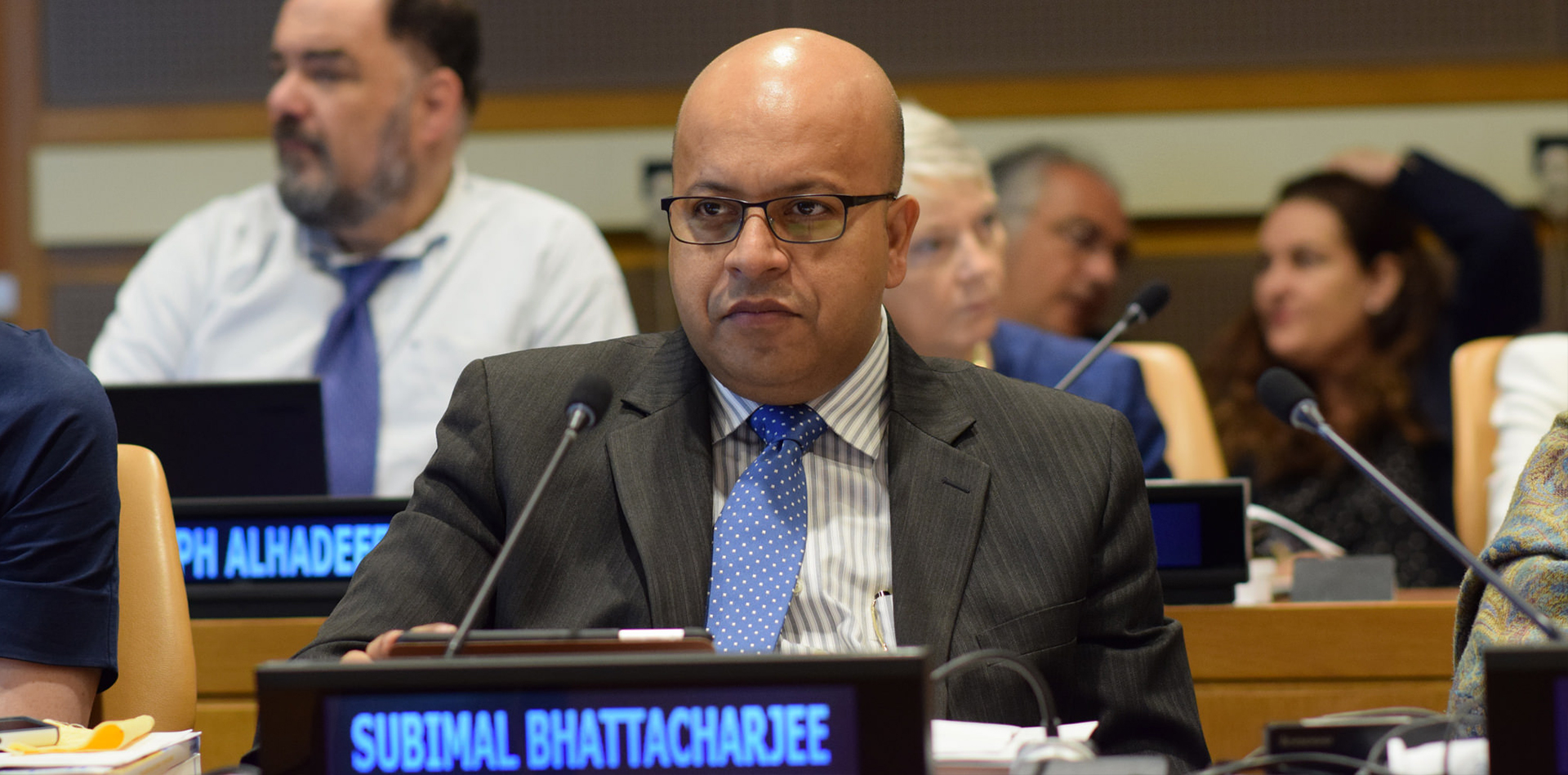
Subimal Bhattacharjee is a defence and cyber security analyst and columnist focusing on technology, national security, and digital governance. Formerly Country Director for General Dynamics Corporation India, he has over two decades of experience in defence policy and cyber strategy.
B-121, Logix Technova, Sector 132, Noida Uttar Pradesh - 201304